Rate-Cut Myths and the Actual Mechanics
A rate cut is a specific operational change to one overnight rate — not a global discount on every asset price. A calmer, source-backed way to read rate cuts using the Fed's own framing of how monetary policy actually transmits.
By CoinSail Editorial
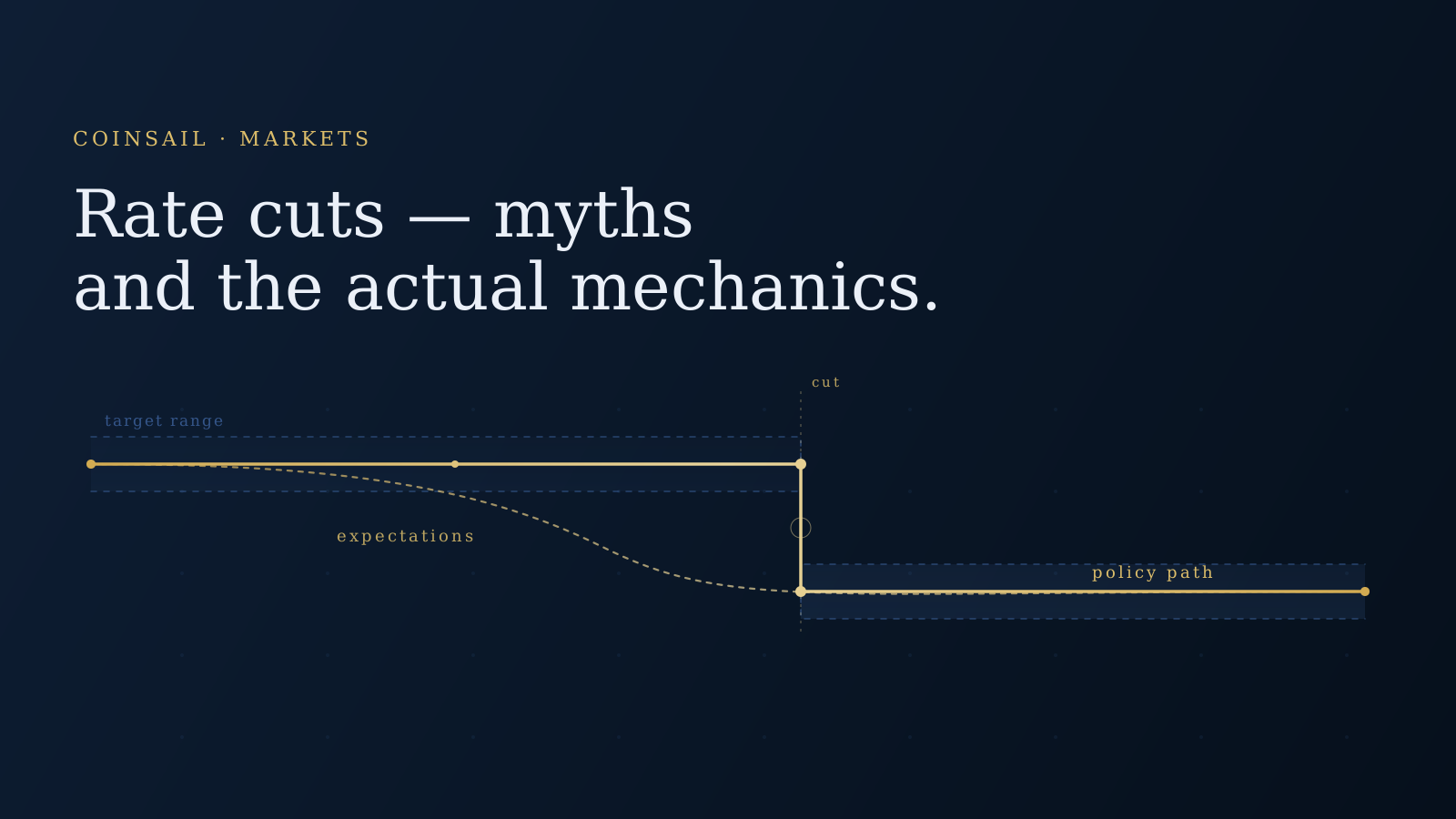
"The Fed cut, stocks go up" is a clean line. It's also the wrong mental model. A rate cut is not a global discount applied to every asset price — it's a specific operational change to one overnight rate, with effects on the rest of the financial system that run through administered rates, market expectations, the term structure of long-term yields, and the reason markets believe the cut happened. Any of those can pull in different directions.
The Federal Reserve is unusually clear about the limits of what its policy lever can do. This article walks through what a cut actually changes, what it doesn't, and how a careful reader can think about it without turning it into a timing tool.
What a rate cut actually changes
In the Fed's own framing, "the FOMC's primary means of adjusting the stance of monetary policy is by changing its target for the federal funds rate." The federal funds rate is, again in the Fed's words, "the rate that banks pay for overnight borrowing." A cut moves the target range for that single overnight rate.
Mechanically, the Fed steers the actual fed funds rate into the new target range using two administered rates — rates set by the Fed itself — that act as floors for different sets of market participants:
- Interest on Reserve Balances (IORB) — the rate the Fed pays banks on reserves held overnight at the Fed. As the NY Fed describes it, IORB "sets a floor on the rates at which banks lend overnight in the fed funds market."
- Overnight Reverse Repurchase (ON RRP) — a facility that lets non-bank participants ("money market funds, government-sponsored enterprises, and primary dealers," in the NY Fed's listing) invest overnight at the Fed at the ON RRP rate. It establishes a floor on what those non-bank lenders are willing to accept.
Together, these two administered rates form a corridor that anchors the federal funds rate inside its target range. A "rate cut" lowers the target range and lowers both administered rates — but everything else in the financial system has to respond through transmission channels, not by decree.
Policy rates vs market rates
The single most important distinction in this whole topic is between what the Fed directly affects and what it influences.
The Fed FAQ is explicit: the Fed directly affects the federal funds rate; it "influences employment and inflation primarily through using its policy tools to affect overall financial conditions." That word "influences" is doing real work — the rates that actually matter for borrowing, lending, and asset pricing (mortgage rates, corporate bond yields, long-dated Treasury yields, equity discount rates) are not directly set by the Fed. They respond to the policy rate via a chain that the Fed itself describes as operating "over time."
Long-term yields are the cleanest example. In a 2013 speech, then-Chair Ben Bernanke decomposed long-term Treasury yields into three components: "one reflecting expected inflation over the term of the security … another capturing the expected path of short-term real, or inflation-adjusted, interest rates … and a residual component known as the term premium." Today's policy rate is one input to the second component. The expected path of future policy is a different input. Inflation expectations are a third. The term premium is a fourth. A change in one of those four can offset, amplify, or simply ignore a change in another.
This is why long-term yields can rise while the Fed is cutting — if markets revise up either inflation expectations or the term premium — and why they can fall while the Fed is hiking, if markets revise down the expected future path.
Why expectations matter before the cut happens
The Fed treats expectations as a policy tool in their own right. Forward guidance is, per the Fed's FAQ, "a tool that central banks use to tell the public about the likely future course of monetary policy." Its purpose is to "influence financial and economic conditions today" by shaping the expected path of policy.
That sentence has a non-obvious implication: most of the financial-conditions effect of a "rate cut" can be priced in long before the announcement. By the time the FOMC actually moves, markets have already adjusted their expected path of short rates, longer yields have moved, and the announcement itself frequently confirms what was already priced. The action you can read in the data isn't the announcement — it's the difference between what was expected and what actually happens, including the language of the statement.
For a reader, this means a clean "cut → stocks rise" reaction at the announcement is unusual precisely because of how forward guidance is designed to work.
Why the reason for the cut matters
Cuts don't come from a vacuum. The Fed's own statement of its mandate is to "promote effectively the goals of maximum employment, stable prices, and moderate long-term interest rates." A cut is the Fed responding to its read of progress against those goals.
That means the reason behind a cut shapes how the same operational change should be interpreted:
- A cut into clear progress on inflation while the labour market remains strong is a different message than a cut into deteriorating employment or financial stress.
- The Fed is explicit that "the linkages from monetary policy to both inflation and employment are not direct or immediate." A cut into weakening conditions is the policy responding to deterioration — it doesn't automatically cancel out the conditions that prompted it.
- Cuts can land in environments where credit spreads are widening, the dollar is strengthening, or risk appetite is poor. Any of those can dominate the headline policy change in how financial conditions actually evolve.
"Why is the Fed cutting?" is therefore the question to ask before "what should markets do about it?"
Why rate cuts are not automatic asset-price signals
Putting the pieces together:
- The Fed directly affects one overnight rate (the federal funds rate); other rates are influenced, not controlled.
- The transmission to spending and prices is, in the Fed's own framing, "not direct or immediate."
- Long-term yields respond to expectations and the term premium — not just today's policy rate.
- Forward guidance is designed to move financial conditions before the announcement, so the announcement itself is often a confirmation of moves already priced.
- The reason for the cut shapes how to read the headline.
Add in the bond-price mechanic that FINRA states plainly — "when interest rates fall, bond prices rise, and vice versa" — and the further point that this sensitivity depends on duration ("the longer the maturity, the higher the duration") — and you can see why a single rate cut produces a different price reaction in two-year Treasuries, ten-year Treasuries, investment-grade corporates, mortgages, equities, and FX. The same announcement, transmitted through different durations and risk channels, can hit each one differently.
None of this means rate cuts don't matter. They matter a great deal. They are simply not a universal directional signal.
A practical rate-cut checklist
When a cut happens or is anticipated, the reader's job is to read it cleanly, not to forecast the next one. Five questions:
- What target actually moved, and by how much? The headline is the new target range for the federal funds rate. Note both the change and the new level.
- What did the Fed say about future policy? Forward guidance — both the statement language and any press-conference framing — is part of the policy action, not a side commentary.
- What was already priced in? The relevant move is the difference between what markets expected and what actually happened, in both the rate change and the guidance.
- Why is the Fed cutting? Progress on inflation; weakening employment; tightening financial conditions; a combination. The reason changes how to read the same operational move.
- How did longer-term yields and broader financial conditions respond? Did long yields fall, or did inflation expectations / the term premium push them somewhere else? Did spreads tighten or widen? The full picture, not just the headline rate, is the read.
These are observable, not predictive. They tell you the shape of the policy event — not what any asset will do next.
Common mistakes
A few failure modes show up repeatedly:
- Treating "rate cut" as a single event. It's a target-rate change plus a forward-guidance update plus the part already priced in. Each has different implications.
- Assuming long rates follow the policy rate. They don't have to. The three-component decomposition is a real constraint, not an academic one.
- Ignoring the reason for the cut. The Fed cuts in response to its read of progress against the dual mandate. That context is part of the policy action.
- Treating one episode as a reliable template. Each cutting cycle has its own combination of inflation, employment, credit conditions, dollar, and term premium. The mechanism is durable; specific outcomes are not.
Risks and limitations
A few honest limits worth keeping visible:
- Transmission is "not direct or immediate." That's the Fed's own framing, not an editorial hedge. Specific outcomes can take quarters to show up in measurable data.
- Mechanisms are tendencies, not laws. Inverse rate-price relationships, three-component decomposition, and forward-guidance pricing are durable features of how markets work — but the size and timing of any specific response is conditional on credit, liquidity, the dollar, and risk appetite.
- Position sizing and time horizon still matter more than the policy headline. A correct read on the mechanics combined with a poorly-sized or mis-horizoned position can still lose money. Policy-aware risk management is not the same as having an edge.
Bottom line
A rate cut is a specific operational change with a partial, lagged, expectations-mediated effect on the rest of the financial system. The Fed adjusts one overnight rate, anchored by two administered rates, and influences everything else through channels the Fed itself describes as gradual and indirect. Long-term yields can move in the opposite direction of the policy change. Forward guidance can move financial conditions before the announcement lands. And the reason for the cut shapes how the announcement should be read.
Done properly, reading a cut is a calm exercise: what moved, what was already priced, why the move happened, and what longer-term yields did about it. Not a directional call.
Sources used
- Federal Reserve — "Monetary Policy: What Are Its Goals? How Does It Work?" — the Fed's primary explainer of its mandate and how the FOMC adjusts the stance of policy via the federal funds rate target.
- Federal Reserve — FAQ, "How does the Federal Reserve affect inflation and employment?" — the explicit distinction between what the Fed directly controls and what it influences, and the "not direct or immediate" caveat on transmission.
- NY Fed — "The Federal Reserve's Two Key Rates: Similar but Not the Same?" (Liberty Street Economics, 2023) — IORB and ON RRP as the administered-rate floors that steer the federal funds rate into its target range.
- Federal Reserve — FAQ, "What is forward guidance, and how is it used in the Federal Reserve's monetary policy?" — the definition and purpose of forward guidance as a tool to shape expectations and influence financial conditions today.
- Speech by Chairman Ben Bernanke — "Long-Term Interest Rates" (Federal Reserve Board, 2013) — the standard three-component decomposition of long-term Treasury yields (expected inflation, expected real short-rate path, term premium).
- FINRA — "Brush Up on Bonds: Interest Rate Changes and Duration" — the inverse relationship between interest rates and bond prices, and duration as the measure of that sensitivity.
"A rate cut is a specific operational change with a partial, lagged, expectations-mediated effect on the rest of the financial system. Read it as context, not as a directional call."
More in this category
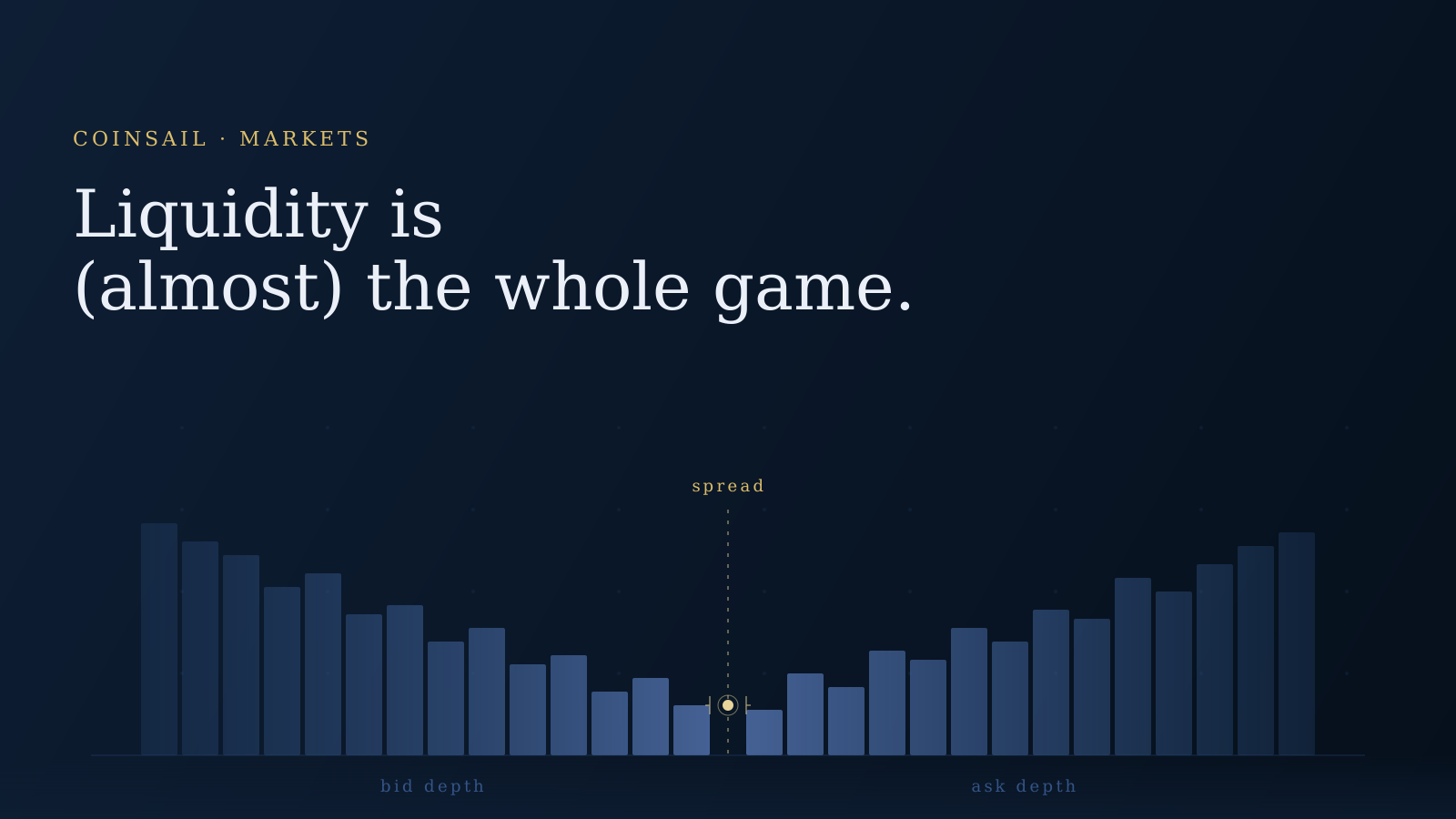
Liquidity Is (Almost) the Whole Game
Liquidity decides how easily prices can be acted on — and how violently they move when they can't. A calmer, source-backed way to read market and funding liquidity without turning it into a timing tool.
9 min read · CoinSail Editorial
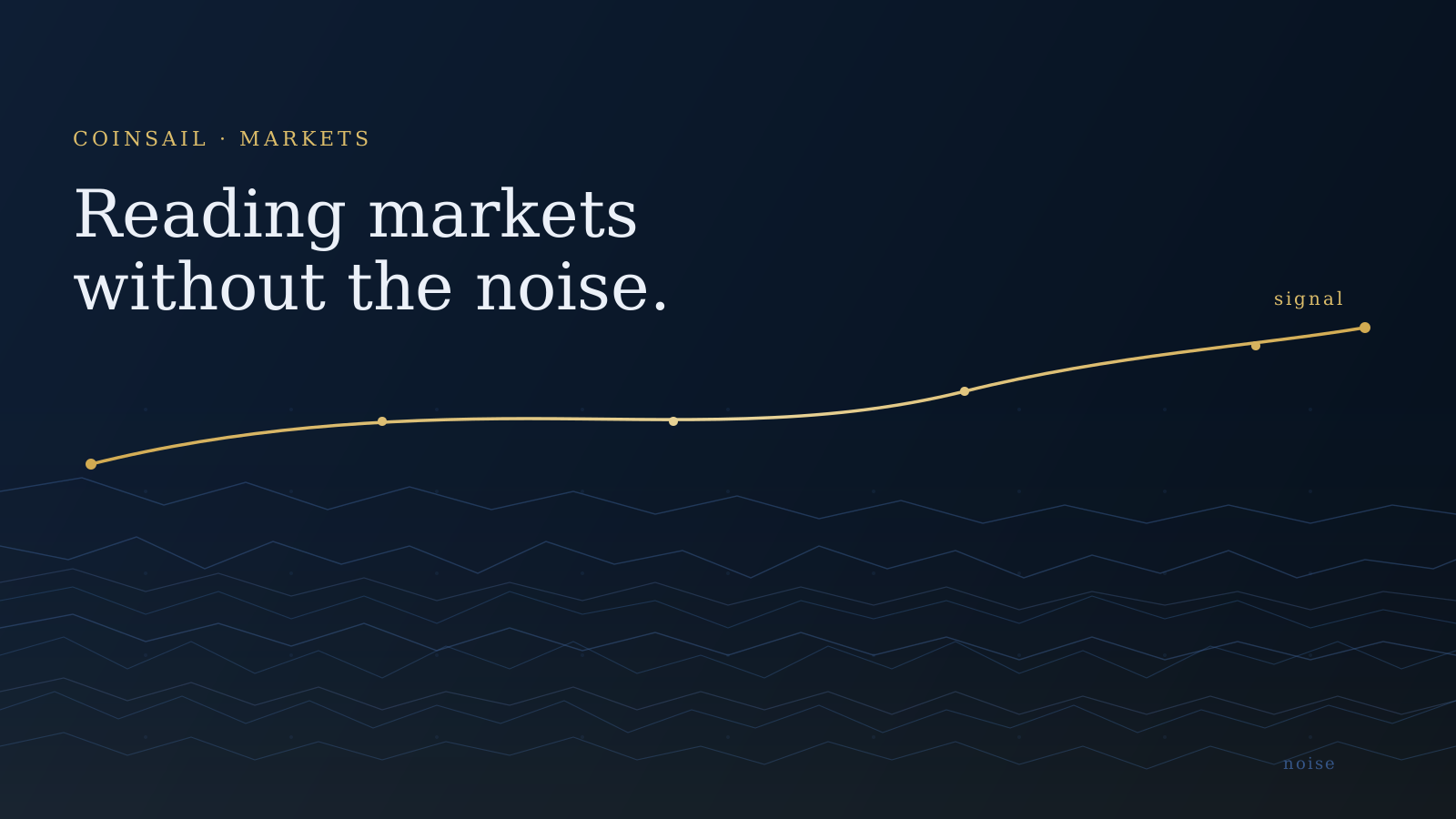
Reading Markets Without the Noise
Most market commentary is noise dressed up as signal. A calmer way to read markets — anchored in how regulators and central banks actually describe volatility, financial conditions, and the data investors track.
7 min read · CoinSail Editorial