Reading Markets Without the Noise
Most market commentary is noise dressed up as signal. A calmer way to read markets — anchored in how regulators and central banks actually describe volatility, financial conditions, and the data investors track.
By CoinSail Editorial
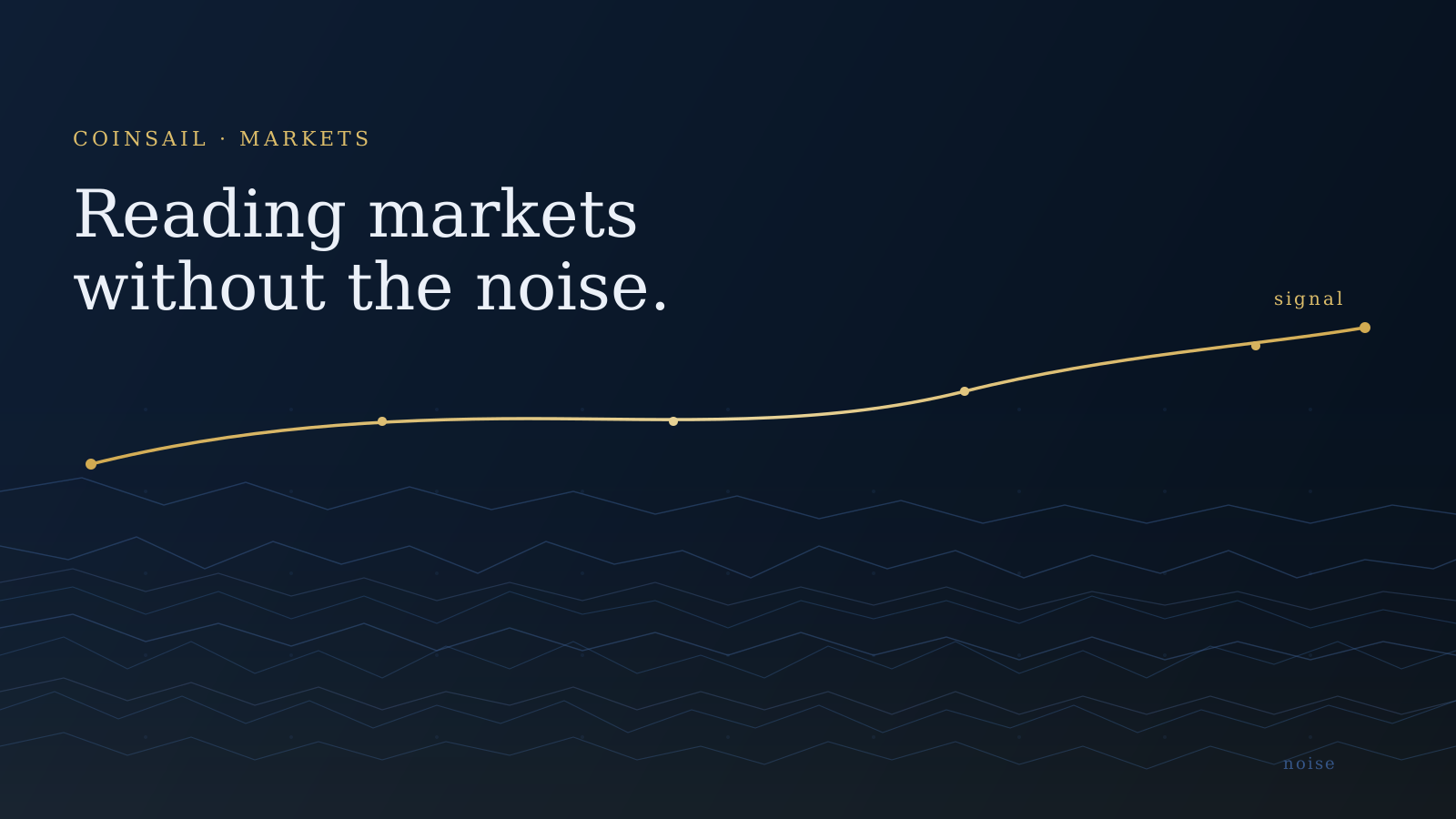
Markets are talking constantly. Most of what they say is noise. The difficulty for a careful reader isn't finding commentary — it's filtering it into something you can act on without fooling yourself.
This piece lays out a calmer way to read markets, anchored where possible in how regulators and central banks actually describe the inputs you're working with. It is not a prediction framework. It is a way to narrow the noise surface and write your read down before the move.
What "market noise" actually means
Noise has a specific definition in the regulator's mouth. The U.S. Securities and Exchange Commission, in its Office of Investor Education and Advocacy alert on social-media-driven trading, defines noise trading as occurring "when an investor makes a decision to buy or sell an investment without the use of fundamental data." The same alert notes that noise traders "generally have poor timing, follow trends, and overreact to good and bad news."
That definition is useful because it strips the romance out of the term. Noise isn't a feeling. It's a description of what happens when a decision is detached from anything that could falsify it later.
The market itself isn't to blame here — FINRA, the U.S. broker-dealer regulator, lists a familiar catalogue of triggers behind market surges and selloffs: "political factors, inflation fears, trade policy concerns, tax breaks, economic optimism or pessimism, global events or a recession watch." Any one of those can move prices on a given day without anything meaningful changing about the underlying businesses or the macro picture. The price move is real. The signal is not.
What more useful inputs look like
Better inputs are usually defined, dated, and measurable. They also tend to have an owner — a central bank, an exchange, or a regulator — that publishes the methodology in the open.
A short, deliberately small set:
- Volatility expectations. Cboe's VIX Index is, in Cboe's own words, "a leading measure of market expectations of near-term volatility conveyed by S&P 500 Index (SPX) option prices." The VIX has historically had an inverse relationship with the S&P 500. It is a volatility read, not a directional call — and that distinction matters more than it sounds.
- Financial conditions. The Federal Reserve Board, in a 2023 FEDS Note introducing its Financial Conditions Impulse on Growth index, describes financial conditions as "a constellation of asset prices and interest rates that are influenced by a variety of factors — including monetary policy — and have the potential to affect the real economy." The Fed's own index combines seven inputs: the federal funds rate, the 10-year Treasury yield, the 30-year fixed mortgage rate, BBB corporate yields, a broad stock-market index, a house-price index, and the broad dollar. Financial conditions act as headwinds or tailwinds to growth over the subsequent year.
- Widely-watched macro releases. FINRA's investor-education list of key indicators is the standard set: real GDP, payrolls and unemployment, inflation (CPI, PCE, PPI), consumer sentiment, retail sales, durable goods orders, FOMC decisions, and PMIs. FINRA also adds an under-rated point — how a reading "comes in relative to expectations" is often more meaningful than the absolute level.
- Stock-level volatility. For individual names, beta is the standard description of how a stock has historically moved versus a benchmark. FINRA puts it plainly: "A stock with a beta value of 1.2 has historically moved 120 percent for every 100 percent move in a benchmark index, such as the S&P 500." That's a description, not a forecast.
Notice what's not on this list: any single chart, any single indicator, any analyst's prediction, any social-media take. None of those are inputs you can audit yourself against a published methodology.
A practical framework for reading markets
The framework is short on purpose.
- Pick a small set of inputs you'll actually look at. Two to four is enough. Volatility expectations, financial conditions, and the scheduled macro release calendar covers most of what a non-professional reader benefits from. More inputs feel rigorous and read like noise.
- Check them on a schedule, not on impulse. Weekly is fine. Daily is rarely necessary. The cadence is the point. FINRA's investor-education line on volatility itself describes long-term, buy-and-hold investors as treating volatility "like background noise"; only day and options traders are paid to focus on it intraday.
- Write the read down before the move. A read you wrote after the price action is a story. A read you wrote before is auditable.
- Record what changed your mind. If you adjust your read inside the cadence, note the specific data point or release that did it. This is what separates a process from a vibe.
When markets get turbulent, FINRA's investor-education guidance is unambiguous: "Avoid impulsive decisions when markets become volatile or economic conditions change." The strongest claim you can defensibly make about a process like this is that it raises the cost of acting impulsively — because you have to overrule something you wrote down.
Common mistakes
A handful of failure modes show up over and over:
- Treating one indicator as a complete read. Financial conditions are a constellation in the Fed's own words. The VIX is one measurement, of one thing, on one horizon. No single number summarises the market.
- Reading a release without its "versus expectations" context. A strong CPI print isn't strong; it's stronger or weaker than what was already in prices. The FINRA framing is correct here.
- Reacting to social-media-driven price action. The SEC's alert is explicit: "Short-term investing in a volatile market carries significant risk of loss." That risk doesn't disappear because the position was popular online.
- Confusing volatility with direction. The VIX rising tells you implied volatility is rising; it does not tell you the market will fall. The relationship is historically inverse, not deterministic.
Risks and limitations
No reading framework eliminates risk. Markets can stay irrational longer than any timing thesis can stay solvent, and the historical relationships discussed here — VIX versus S&P, financial conditions versus growth, releases versus prices — are tendencies, not guarantees.
Three honest limits to keep visible:
- An integrated read is a current view, not a forecast. A read that's right at noon can be wrong by close, and the right response is usually to update the read, not to defend it.
- Reading markets accurately is not the same skill as positioning a portfolio. A correct macro read and a poor position size can still lose money — and a less complete read with a sensible position size can do fine.
- Short-term trading specifically remains, in the SEC's own framing, an activity with "significant risk of loss." A reading habit is not a trading edge.
What to watch next
For most readers, the watchlist is small:
- Volatility expectations (VIX or similar), as a calm-versus-stressed indicator of the SPX options market — not as a directional call.
- A published financial-conditions index (the Fed's FCI-G or the Chicago Fed's NFCI are the obvious anchors), as a single-number summary of whether financial conditions are a headwind or a tailwind to growth.
- The scheduled macro calendar. The releases FINRA highlights — payrolls, CPI/PCE, FOMC days, PMI prints — are the most-discussed moments. Even if you don't trade them, knowing they're coming changes how to interpret price action that week.
The value isn't in the indicators. It's in the cadence and the writeup.
Bottom line
Most market commentary is noise dressed up as signal. A useful reading process narrows the inputs, fixes the cadence, writes the read down, and accepts honestly what the read can't tell you. Done that way, you spend less time reacting and more time understanding — which is the whole point of paying attention to markets in the first place.
Sources used
- FINRA — Volatility — investor education overview of volatility and beta, including the framing that long-term investors treat volatility as background noise.
- FINRA — Investor Tips for Turbulent Markets — common triggers of surges and selloffs, plus the explicit "avoid impulsive decisions" guidance.
- FINRA — Key Economic Indicators Every Investor Should Know — the standard list of widely-watched macro releases and the "relative to expectations" framing.
- Cboe — VIX Index — Cboe's own definition of the VIX as a measure of near-term S&P 500 implied volatility, and its historically inverse relationship with the S&P 500.
- Federal Reserve Board — A New Index to Measure U.S. Financial Conditions — the definition of financial conditions and the seven indicators in the FCI-G (FEDS Note, 2023).
- SEC — Investor Alert: Short-Term Trading Based on Social Media — the SEC Office of Investor Education and Advocacy's explicit definition of noise trading and its warning that short-term investing in a volatile market carries significant risk of loss.
"The cost of noise isn't measured in headlines. It's measured in the decisions you'd never have made if the screen had been off."
More in this category
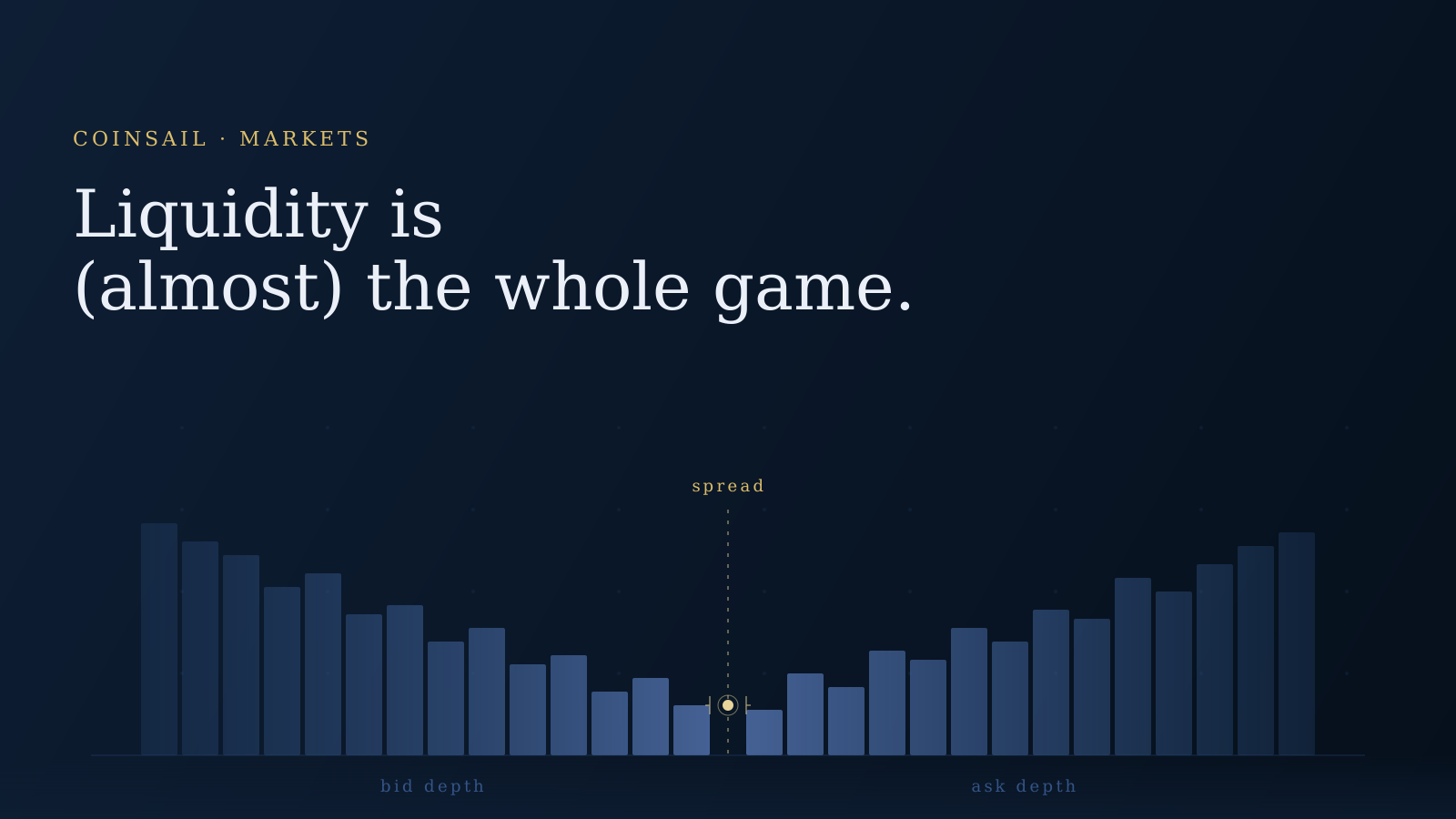
Liquidity Is (Almost) the Whole Game
Liquidity decides how easily prices can be acted on — and how violently they move when they can't. A calmer, source-backed way to read market and funding liquidity without turning it into a timing tool.
9 min read · CoinSail Editorial
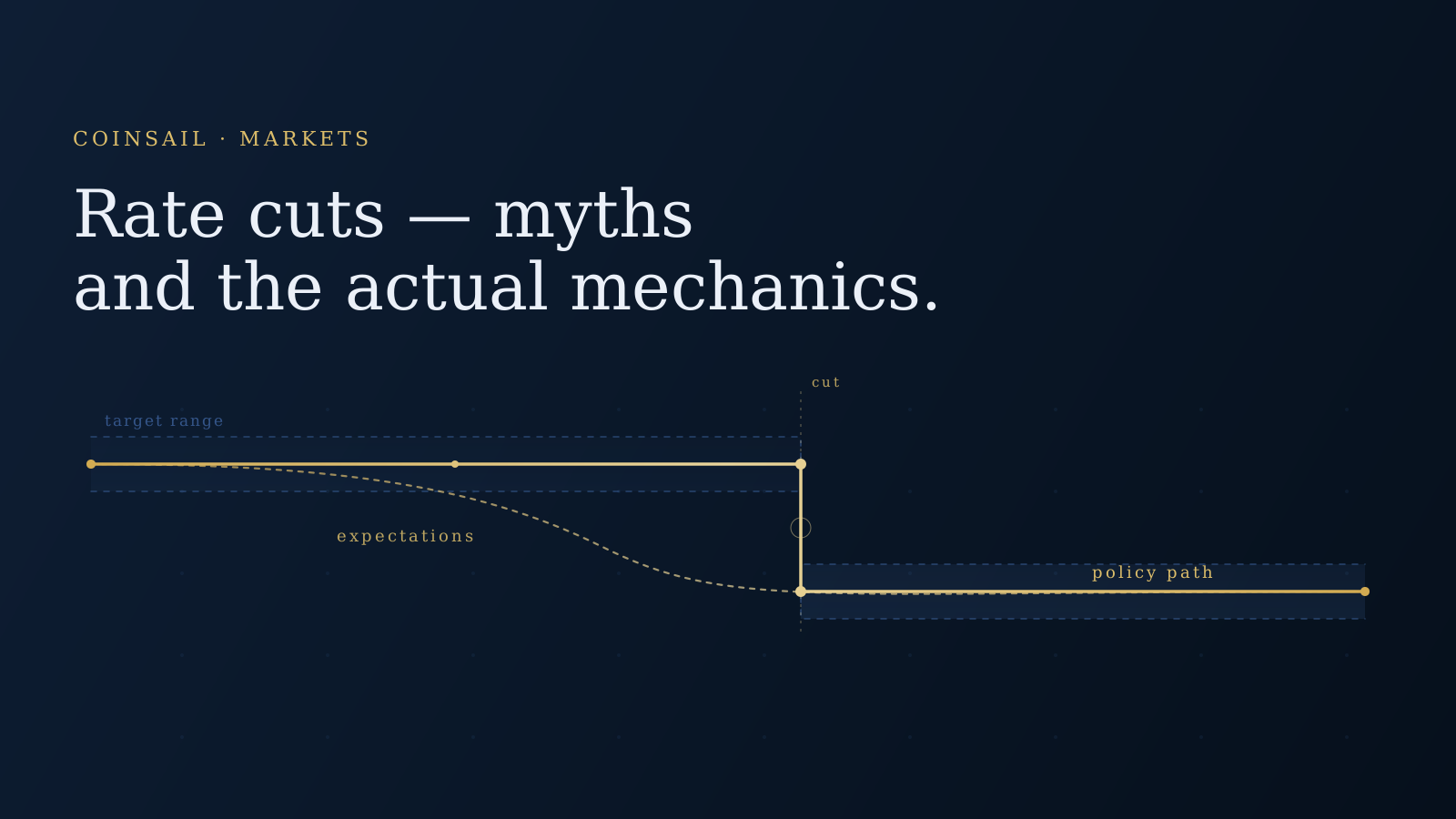
Rate-Cut Myths and the Actual Mechanics
A rate cut is a specific operational change to one overnight rate — not a global discount on every asset price. A calmer, source-backed way to read rate cuts using the Fed's own framing of how monetary policy actually transmits.
10 min read · CoinSail Editorial